> For the complete documentation index, see [llms.txt](https://help.citrusad.com/retail-media-interface/llms.txt). Markdown versions of documentation pages are available by appending `.md` to page URLs; this page is available as [Markdown](https://help.citrusad.com/retail-media-interface/integration/feature-integrations/integrating-parent-products.md).
# Integrating Parent Products
## What is a child product?
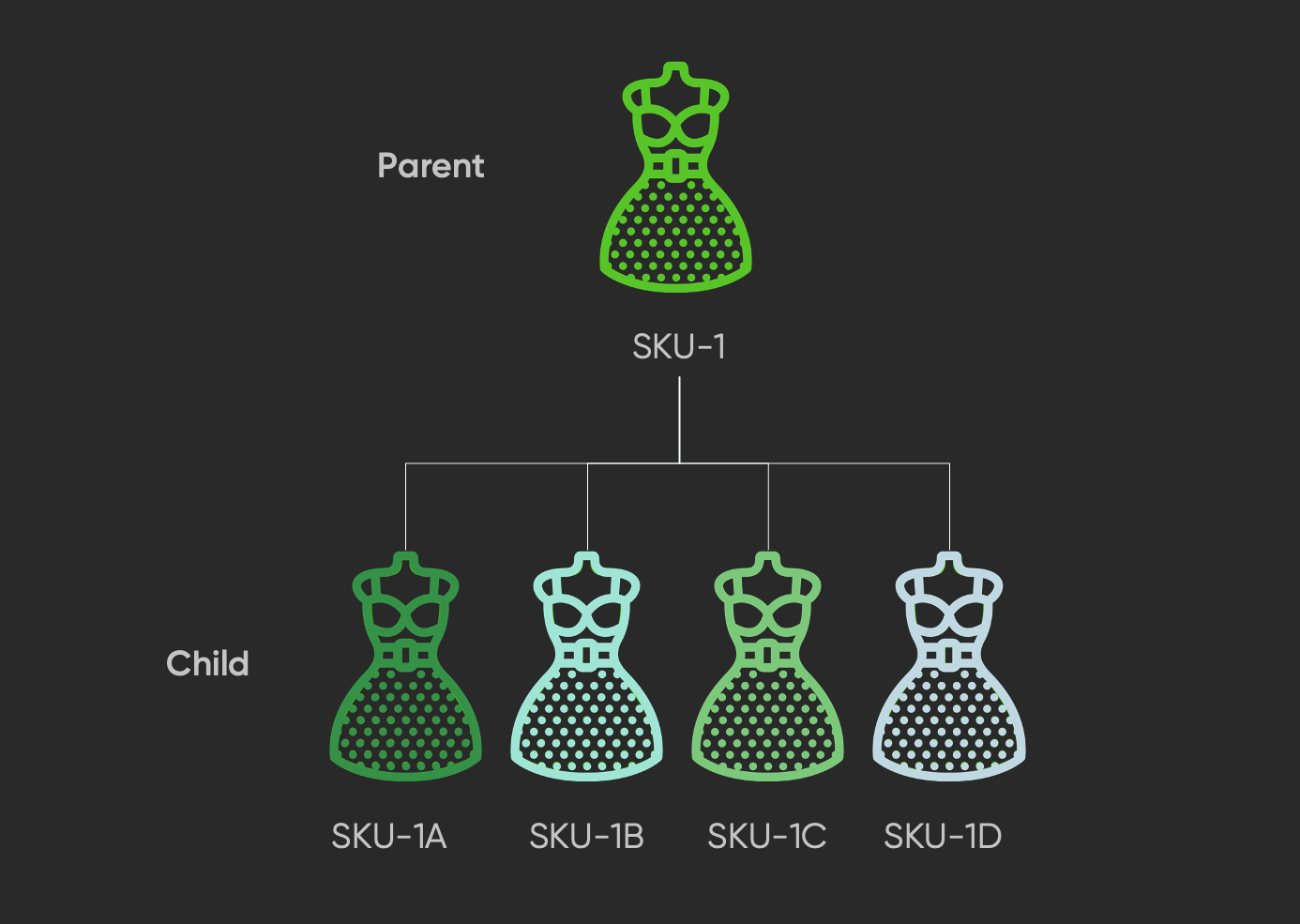
Some products have parent/child relationships. There is a parent product, and then multiple variations are the child products. Advertisers want to optimize campaigns at a child product level to ensure they are promoting the most relevant and best performing products to customers.
Other products will not have these relationships, and therefore will see no change or impact in the platform.
## UI capabilities
### Product selection
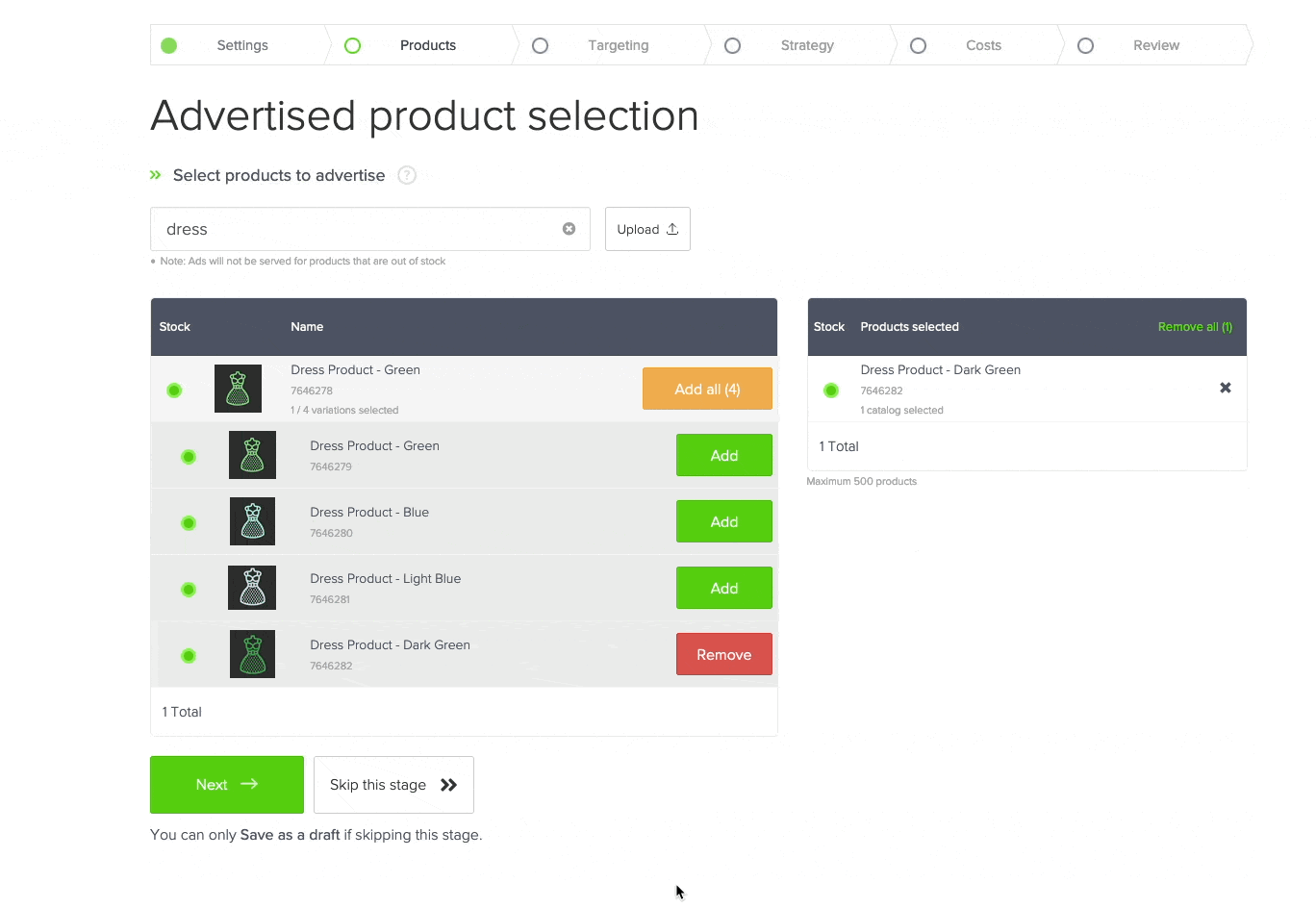
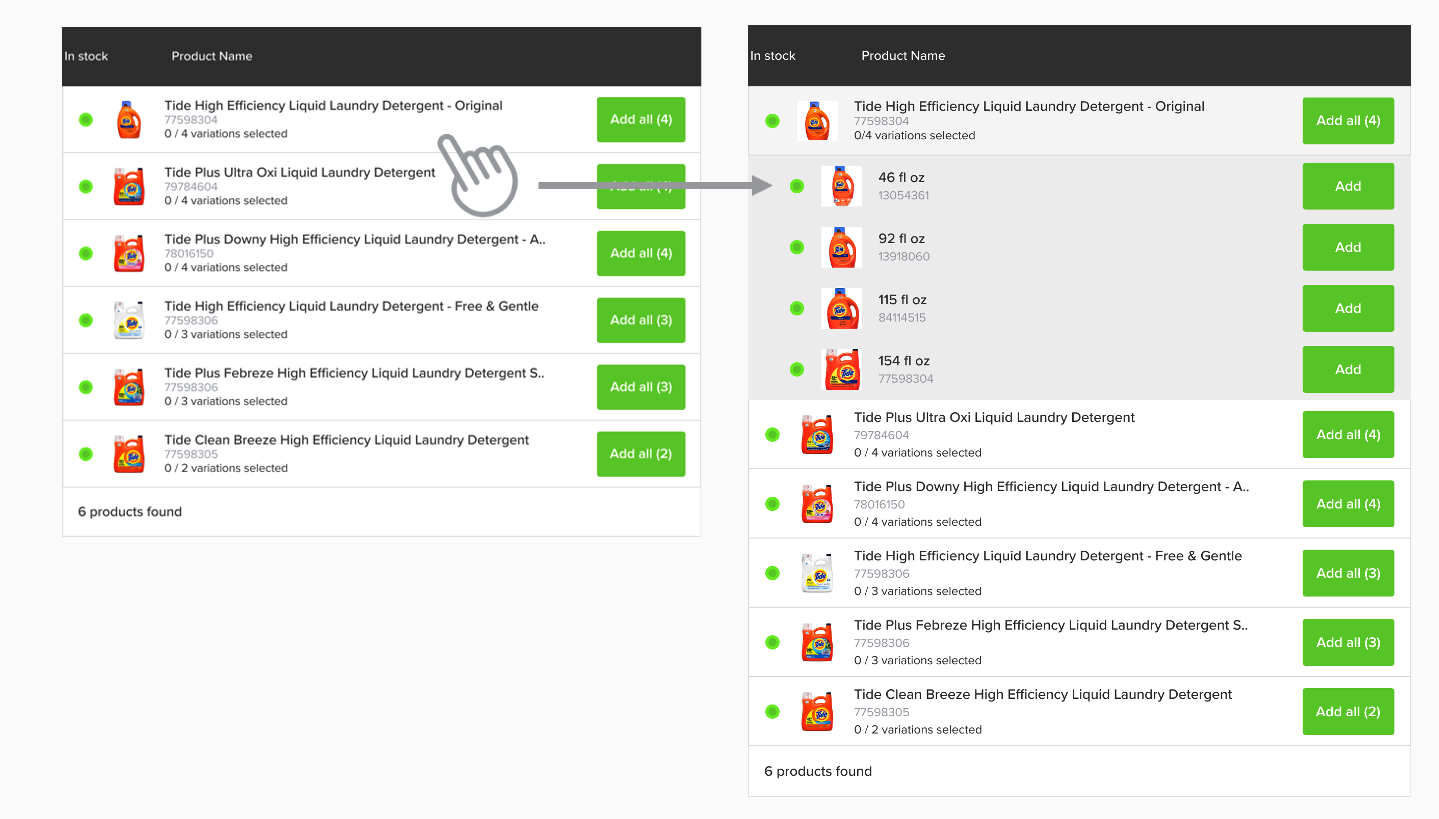
When selecting products, parent/child products will be grouped.
You can click a parent product and it will expand to show child products. This will allow your advertisers to optimize to a unique child product level in the campaign.
### Reporting
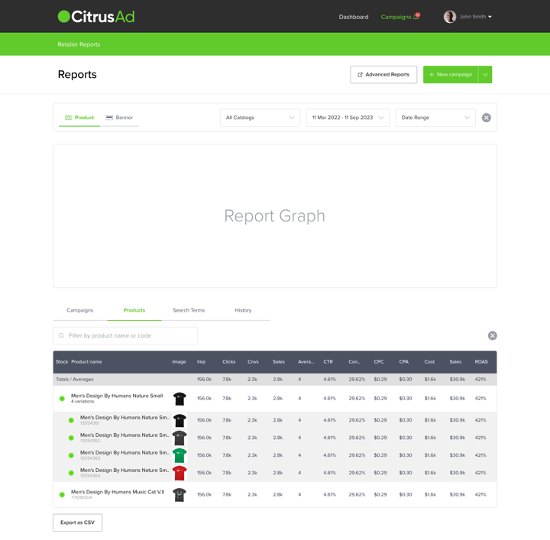
In-platform reporting will automatically group by parent product when a product has a `productCollection` associated with it.
In CSV exports from the platform, for product codes there is a new "Parent Code" column, which will populate the `productCollection` value.
If filtering by product code in the UI, then the parent product metrics are blank, and the parent product can be clicked to show reporting for any child products.
## Integration requirements
### Updating products
When you synchronise products with Epsilon Retail Media, there is a new `productCollection` field in the POST request for your products.
```http
POST $BASE_URL/v1/catalog-products?teamId= HTTP/1.1
accept: application/json
content-type: application/json
Authorization: Basic
{
"catalogProducts": [
{
"catalogId": "628dbe95-2ec9-4e07-881d-3e9f92ab2e0b",
"gtin": "23556578965543",
"productCollection": "abc-123",
"inventory": 50,
"price": "19.99",
"tags": [
"imageurl:https://your.image.host.com/image.jpg","name:Covergirl Clean 120 Creamy Natural Liquid Foundation30mL"
],
"filters": [
"category:Health&Beauty","category:Grocery","Brand:Covergirl","Special_Flag:0"
]
}
]
```
When this field is present, the product selection and reporting tables will aggregate at the product collection level for all products that have the same `productCollection`.
If you are synchronising by file, there is a `product_collection` column that you can optionally populate per product.
### Ad rendering
There are no changes needed when rendering ads from Epsilon Retail Media. The `gtin` you receive in the API response will be that of the "child" product, and you will need to render that on your website to your customers.
---
# Agent Instructions
This documentation is published with GitBook. GitBook is the documentation platform designed so that both humans and AI agents can read, navigate, and reason over technical content effectively. Learn more at gitbook.com.
## Querying This Documentation
If you need additional information that is not directly available in this page, you can query the documentation by asking a question.
Perform an HTTP GET request on the following URL with the `ask` and `goal` query parameters:
```
GET https://help.citrusad.com/retail-media-interface/integration/feature-integrations/integrating-parent-products.md?ask=&goal=
```
`ask` is the immediate question: it should be specific, self-contained, and written in natural language.
`goal` is what the user is ultimately trying to achieve, the reason they need the answer. Sharing it helps GitBook give you a better, more relevant answer. A goal is most helpful when it describes the outcome the user wants rather than restating the question. For example, with `ask=how do I create an API token`, a goal like `automate deployments from our CI pipeline` lets GitBook tailor the answer to that use case.
The response will contain a direct answer to the question and relevant excerpts and sources from the documentation.
Use this mechanism when the answer is not explicitly present in the current page, you need clarification or additional context, or you want to retrieve related documentation sections.