> For the complete documentation index, see [llms.txt](https://help.citrusad.com/retail-media-interface/llms.txt). Markdown versions of documentation pages are available by appending `.md` to page URLs; this page is available as [Markdown](https://help.citrusad.com/retail-media-interface/integration/data-api/customer-data/in-depth-behaviour-examples.md).
# In-depth behaviour examples
The below uses the same example set-up as the prior page, retail or corporate customers, with age range targeting available.
In this example, we will use real names and a larger feed to show some examples on how the platform works.
**Example data:**
| `customer_id` | `customer_targeting:type` | `customer_targeting:age-range` |
| ------------- | ------------------------- | ------------------------------ |
| Josh | retail | 21-30 |
| Jesse | corporate | 21-30 |
| Atish | | 31-40 |
| Bo | corporate | |
| Dayoung | retail | 41-50 |
**Targeting matrix**
| `customer_id` | Can be targeted when | Sees campaigns targeted to |
| ------------- | ------------------------------------------------------ | --------------------------------------------------------------------------------------------------------------------- |
| Josh | Users pick \[retail] OR \[21-30] in any combination | All customers (no targeting), retail, 21-30, retail + 21-30, corporate + 21-30 |
| Jesse | Users pick \[corporate] OR \[21-30] in any combination | All customers (no targeting), corporate, 21-30, corporate + 21-30, retail + 21-30 |
| Atish | Users pick \[31-40] in any combination | All customers (no targeting), 31-40, corporate + 31-40, retail + 31-40 |
| Bo | Users pick \[corporate] in any combination | All customers (no targeting), corporate, corporate + 21-30, corporate + 31-40, corporate + 41-50, 21-30, 31-40, 41-50 |
| Dayoung | Users pick \[retail] OR \[41-50] in any combination | All customers (no targeting), retail, 21-30, retail + 21-30, retail + 31-40, retail + 41-50, corporate + 41-50 |
{% hint style="info" %}
Why are Atish and Bo seeing more ads?
When the customer data sent to Epsilon Retail Media is not complete for every customer, if they are assigned with one attribute a campaign targets, it will appear for them.
To empower your brands to hyper-target, you need to ensure they have assigned values for every targeting attribute.
{% endhint %}
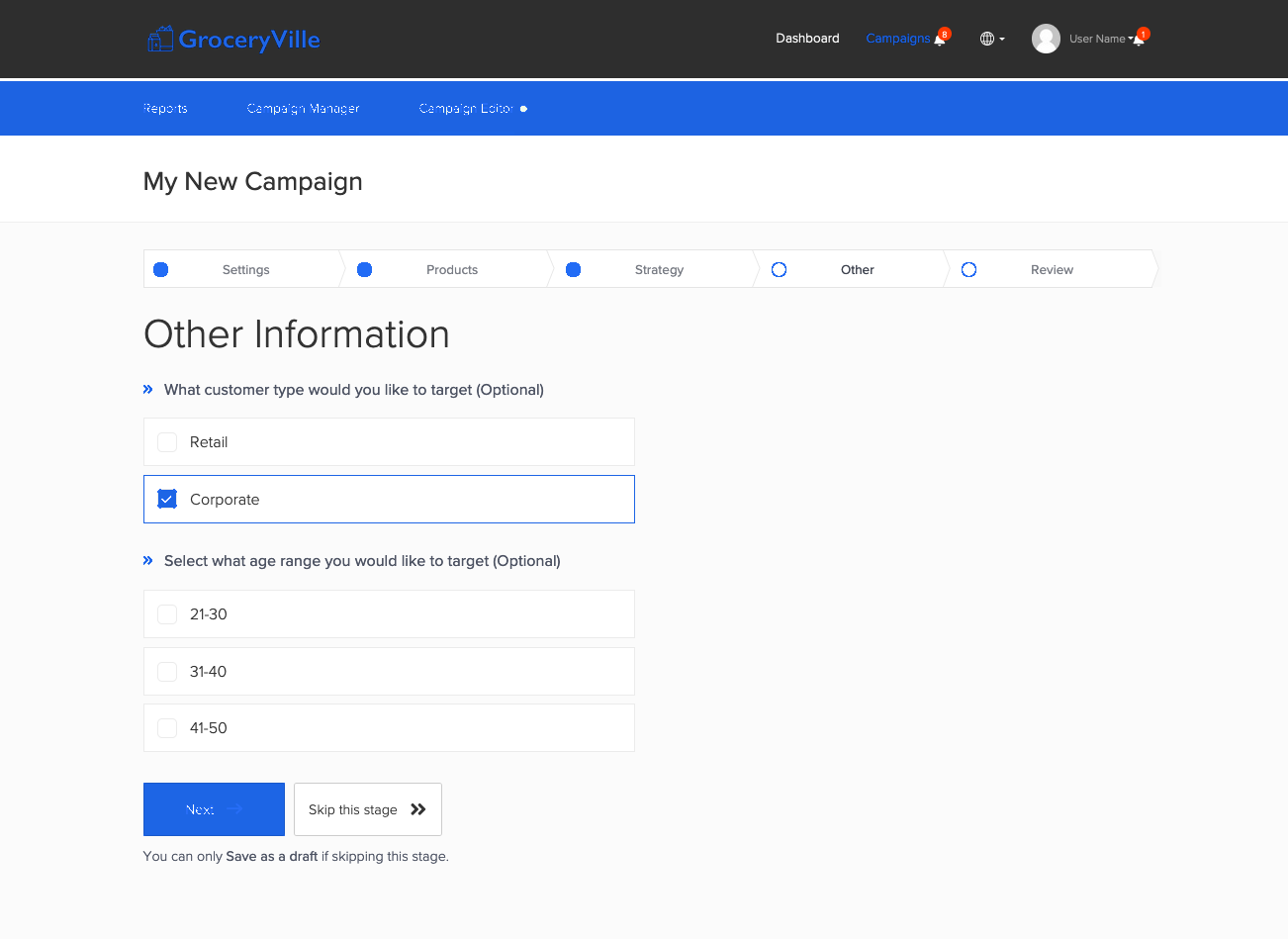
### I want to target corporate audiences
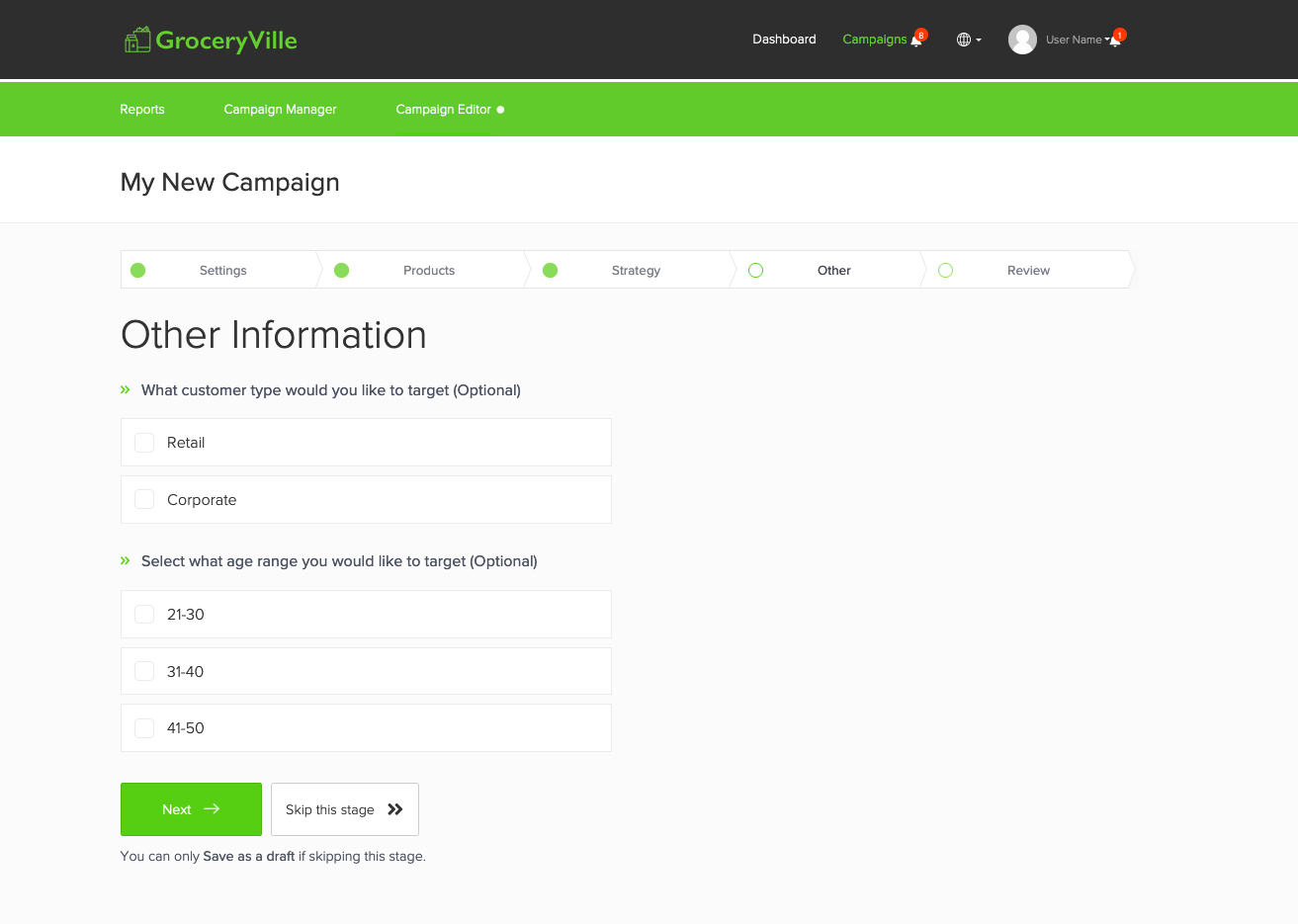
As a brand I only need to select "Corporate".
This campaign will target **Jesse** as well as **Bo** and **Atish**, as Bo and Atish's customer data has not been synchronised for all attributes. This can be resolved by syncing all data for all customers.
{% hint style="warning" %}
In this case, do not select age ranges
As targeting operates as an OR statement, selecting age ranges means you will also target users of that age, but they may not be assigned with Corporate.
{% endhint %}
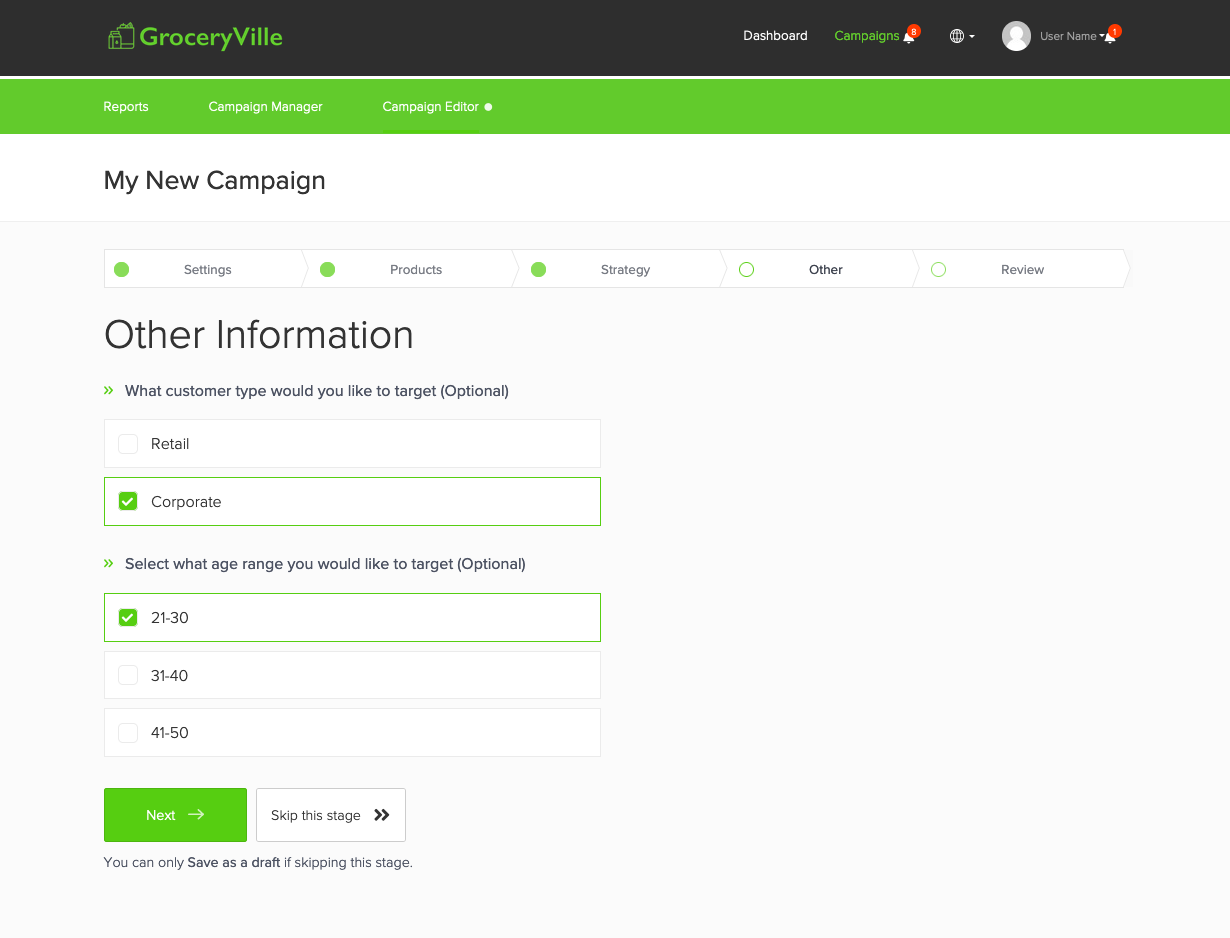
### I want to target corporate audiences aged 21-30
Unfortunately, this level of targeting is not possible as it operates as an OR statement. If you select "Corporate" and the age range "21-30", you will target any users assigned with "corporate", and any users assigned with "21-30".
This campaign will target all customers except **Dayoung**, as Dayoung is not assigned with "corporate" or "21-30"
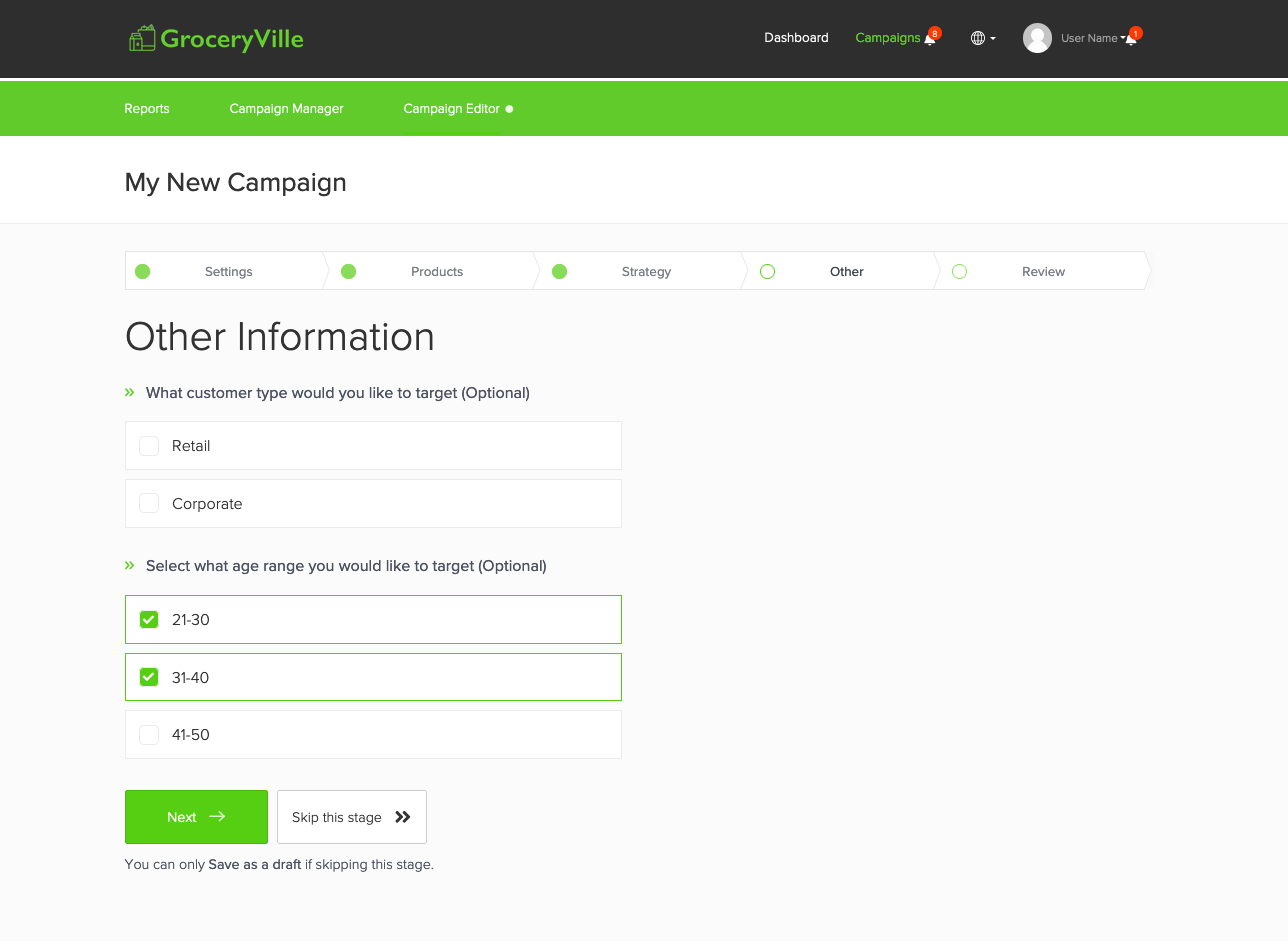
### I want to target audiences aged 21-40
In this case, as a brand I need to select the age range "21-30" and "31-40". I can also select both customer types for the same result.
This campaign will target **Jesse**, **Josh**, as well as **Bo**, as Bo's customer data has not been synchronised for all attributes. This can be resolved by syncing all data for all customers.
---
# Agent Instructions
This documentation is published with GitBook. GitBook is the documentation platform designed so that both humans and AI agents can read, navigate, and reason over technical content effectively. Learn more at gitbook.com.
## Querying This Documentation
If you need additional information that is not directly available in this page, you can query the documentation by asking a question.
Perform an HTTP GET request on the following URL with the `ask` and `goal` query parameters:
```
GET https://help.citrusad.com/retail-media-interface/integration/data-api/customer-data/in-depth-behaviour-examples.md?ask=&goal=
```
`ask` is the immediate question: it should be specific, self-contained, and written in natural language.
`goal` is what the user is ultimately trying to achieve, the reason they need the answer. Sharing it helps GitBook give you a better, more relevant answer. A goal is most helpful when it describes the outcome the user wants rather than restating the question. For example, with `ask=how do I create an API token`, a goal like `automate deployments from our CI pipeline` lets GitBook tailor the answer to that use case.
The response will contain a direct answer to the question and relevant excerpts and sources from the documentation.
Use this mechanism when the answer is not explicitly present in the current page, you need clarification or additional context, or you want to retrieve related documentation sections.